

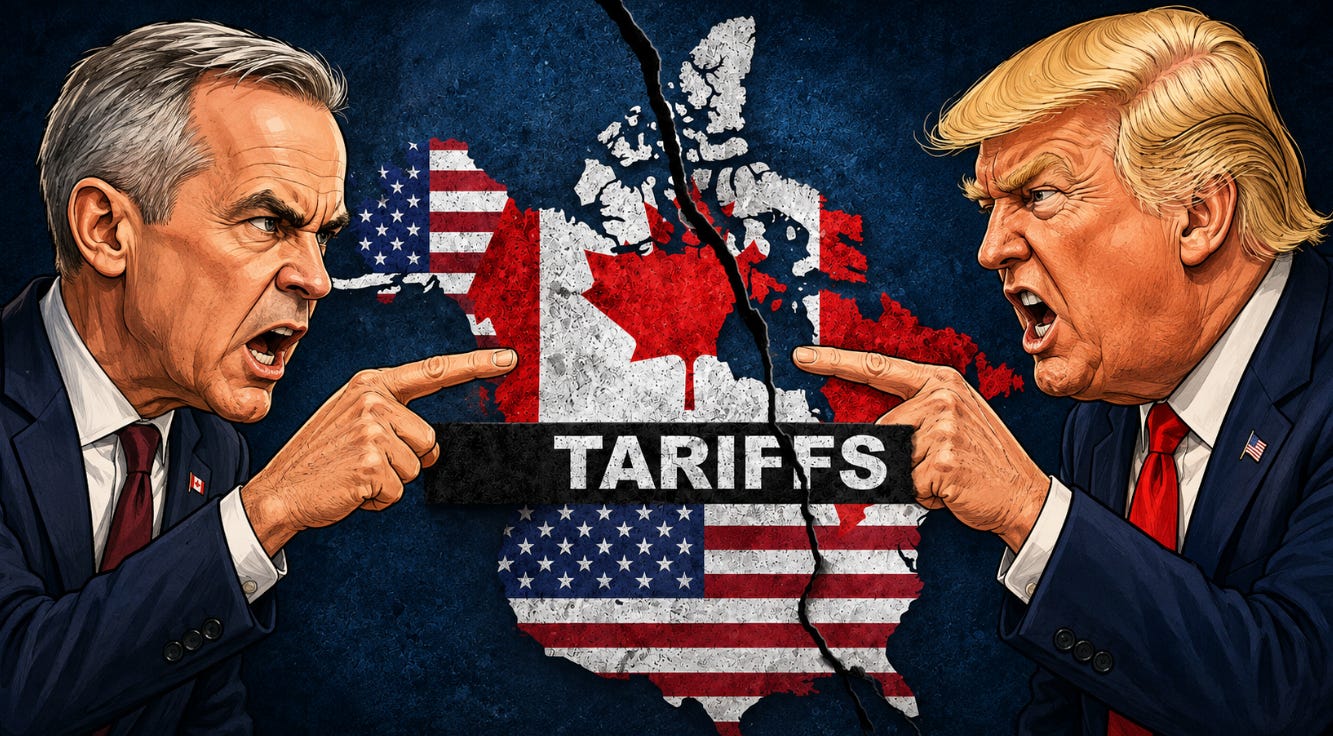
“Mastering our energy is mastering our destiny”
Mark Carney, Prime Minister of Canada
Merchants,
over the weekend the long simmering fight between Washington and Ottawa finally boiled over.
The United States hit roughly $20 billion of Canadian goods with 50% tariffs, invoking Section 338 of the 1930 Tariff Act, a provision no president had ever used before.
Talks that were supposed to end in a deal collapsed at the last minute, each side blaming the other.
Prime Minister Mark Carney called it plainly.
“You’re at war when you get attacked. We got attacked”.
He suspended negotiations, pledged to match the tariffs dollar for dollar with counter duties on about $20 billion of US goods starting September 8 and told his premiers he is designing an aid package built to outlast the rest of Trump’s term if it has to.
A University of Calgary economist put the jobs at risk near 90,000 if the tariffs stick. The loonie slid toward 1.38 to the US dollar. Ottawa now sees little chance of new talks before the November midterms.
This one looks like it settles in for a long stay.
If you want a read on how this ends, watch where the money goes, not where the politicians point.
This data was brought to you in partnership with Polymarket.
On Polymarket, the odds of a US-Canada deal to lower tariffs by the end of August sat up near 85% only a few days ago, while the 2 sides still sounded close.
When the talks blew up over the weekend, that number fell off a cliff.
On Monday it was around 9%.
That’s a market re-pricing the entire timeline. The crowd that bets real money on outcomes has written off a quick fix which is exactly what Carney’s own people are signaling too. A 80 point swing in under a week happens when the people closest to the negotiating table stop pretending a deal is close.
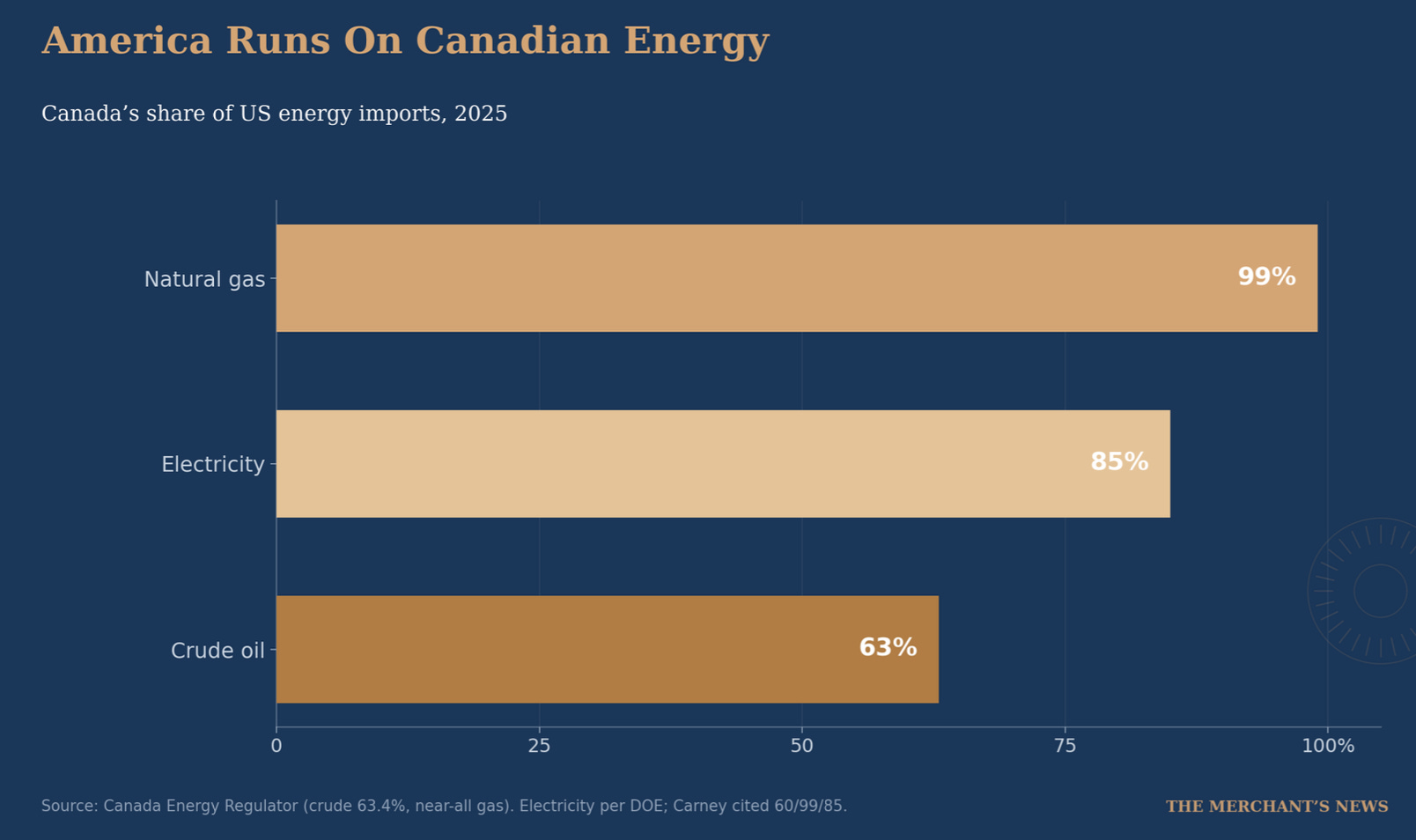
The tariff list hits furniture, wood, steel, aluminum, autos, appliances, a long spread of everyday goods.
Read down it carefully, though, and you notice what is missing.
Oil is not there…. Gas is not there.
The single largest thing Canada sells to America, by far, was left untouched.
That omission is the most honest thing in the whole dispute.
You can tell who holds the leverage by looking at what nobody dares to tax.
Everything got hit, except the barrel
The reason energy stayed off the list is simple.
The United States cannot easily do without it.
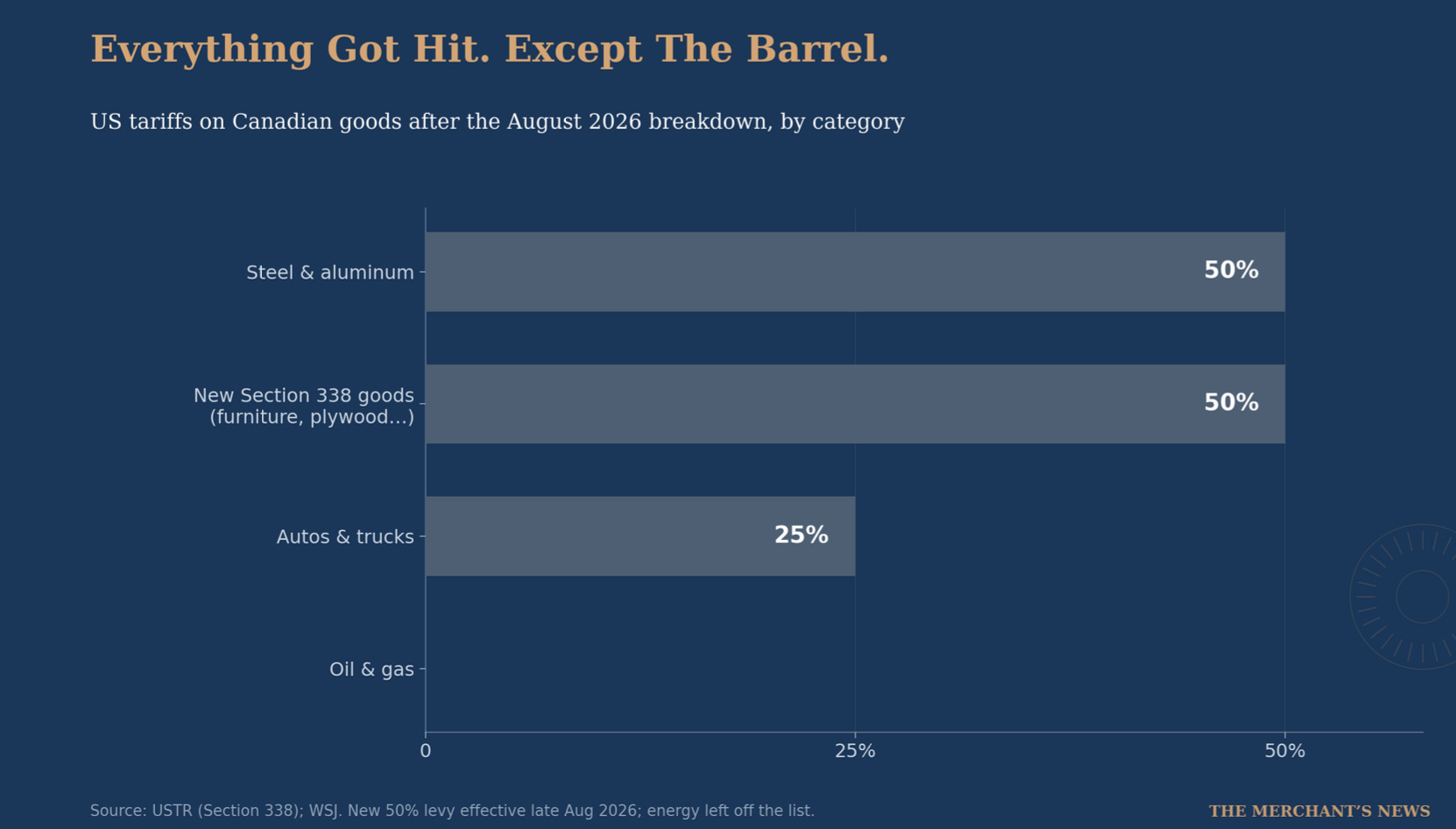
Carney made the case himself in the same breath as he suspended talks, telling reporters that Canada supplies “99% of their natural gas imports, 85% of their electricity imports, and 60% of their crude oil imports” .
Treat that as the political line it is, then check it against the data.
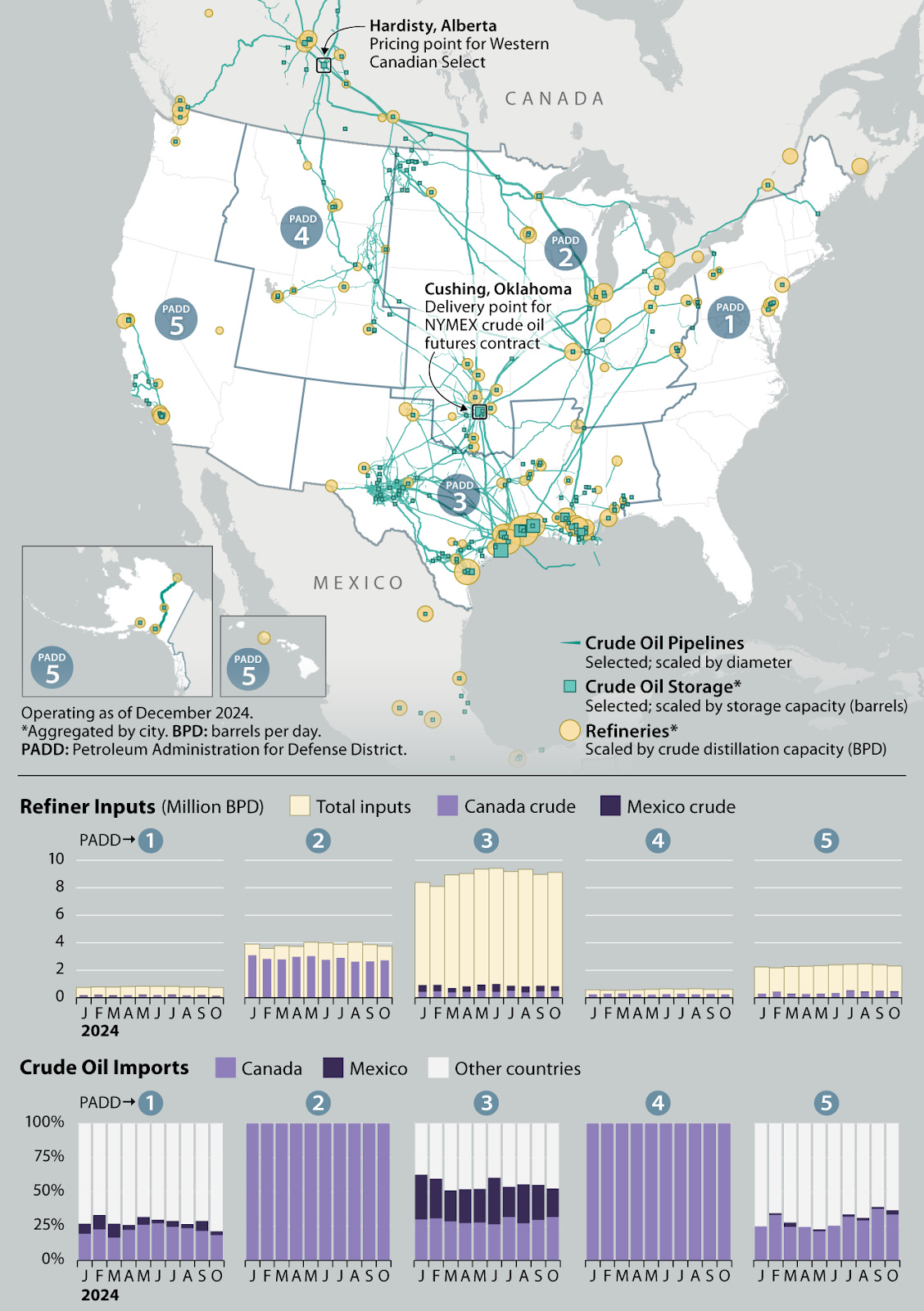
The Canada Energy Regulator has Canada supplying 63.4% of US crude imports in 2025 and very close to all of the gas America buys from abroad.
The rhetoric rounds the edges so the dependence is real.
There’s an irony Trump never mentions.
The trade deficit with Canada that he keeps citing as his grievance is, in large part, that heavy crude.
Exclude Canadian oil and the US would run a surplus.
But its refineries, the ones on the Gulf Coast and across the Midwest built specifically to run heavy, sour barrels, would also run at lower capacity.
Roughly 3/4 of the heavy crude the US imports comes from Canada, and Canadian barrels make up close to a quarter of everything American refineries actually run. Midwest refiners alone lean on Canada for about 70% of their supply.
During a year when the Iran war has choked Middle East flows through Hormuz and diesel margins have touched records, Canadian heavy has been the calm, overland hedge next door.
You do not slap a tariff on the fuel that keeps your own refineries humming and your own pump prices down 10 weeks before an election.
The reality check: This coupling is tight enough to bite in real time. Scheduled oil-sands maintenance is due to pull 100k of barrels a day offline in the weeks ahead, Alberta storage has been running thin and back in early April, diesel rich synthetic crude briefly spiked to almost US$20 a barrel over the American benchmark. When Canada sneezes on supply, US refiners feel it fast.
The trap hiding inside the leverage
So Canada holds a real card.
The trouble is that the same dependence runs the other way, and it runs harder.
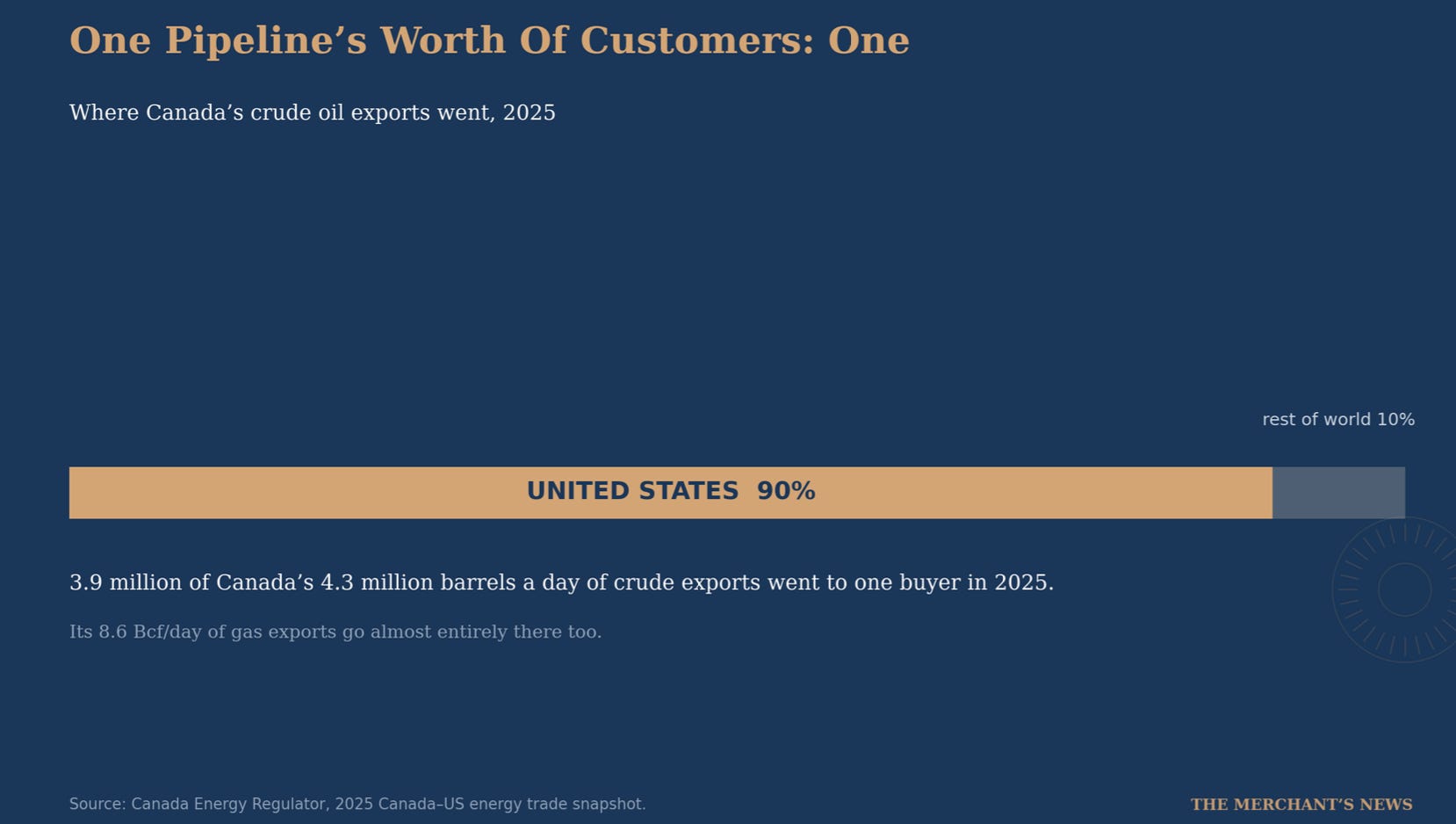
In 2025, about 90% of Canada’s crude exports, some 3.9 million barrels a day out of 4.3 million, went to a single buyer.
The 8.6 billion cubic feet a day of gas it ships goes almost entirely to the same address.
All told, Canada’s hydrocarbon exports to the US were worth about $157 billion in 2025, roughly 1/5 of everything the country sells abroad.
When close to 9 of every 10 barrels you sell have exactly one destination, “we’ll just sell it to someone else” is a much harder sentence to finish than it sounds.
Geography is the cage.
Most of the oil comes out of Alberta, which is landlocked, and for years it had almost no way to reach tidewater except by going south.
That is why Canadian crude sells at the WCS discount, billions of dollars a year handed to US refiners simply because the barrels had nowhere else to go. Leverage looks very different when your product can only travel in one direction.
The escape valve, real and tiny
There is a way out, and it just opened.
The expanded Trans Mountain pipeline, which finally gave Alberta a real line to the Pacific, has been running above 80% utilization since it came on in mid-2024, according to the regulator and the barrels are starting to find new buyers.
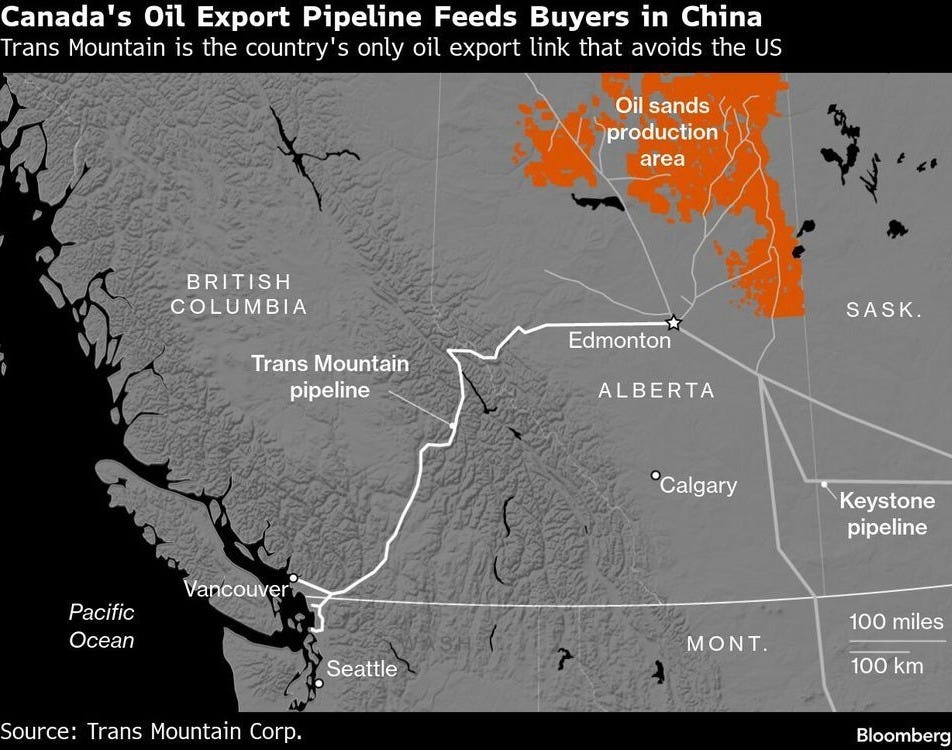
By November 2025, non US destinations were taking around 676,000 barrels a day, close to 15% of Canada’s crude exports, up from just 6% a year earlier.
China is the standout.
It went from a rounding error, a few thousand barrels a day through most of the last decade, to about 207,000 a day in Trans Mountain’s first full year, and for a stretch it pulled more of that pipeline’s oil than the United States did.
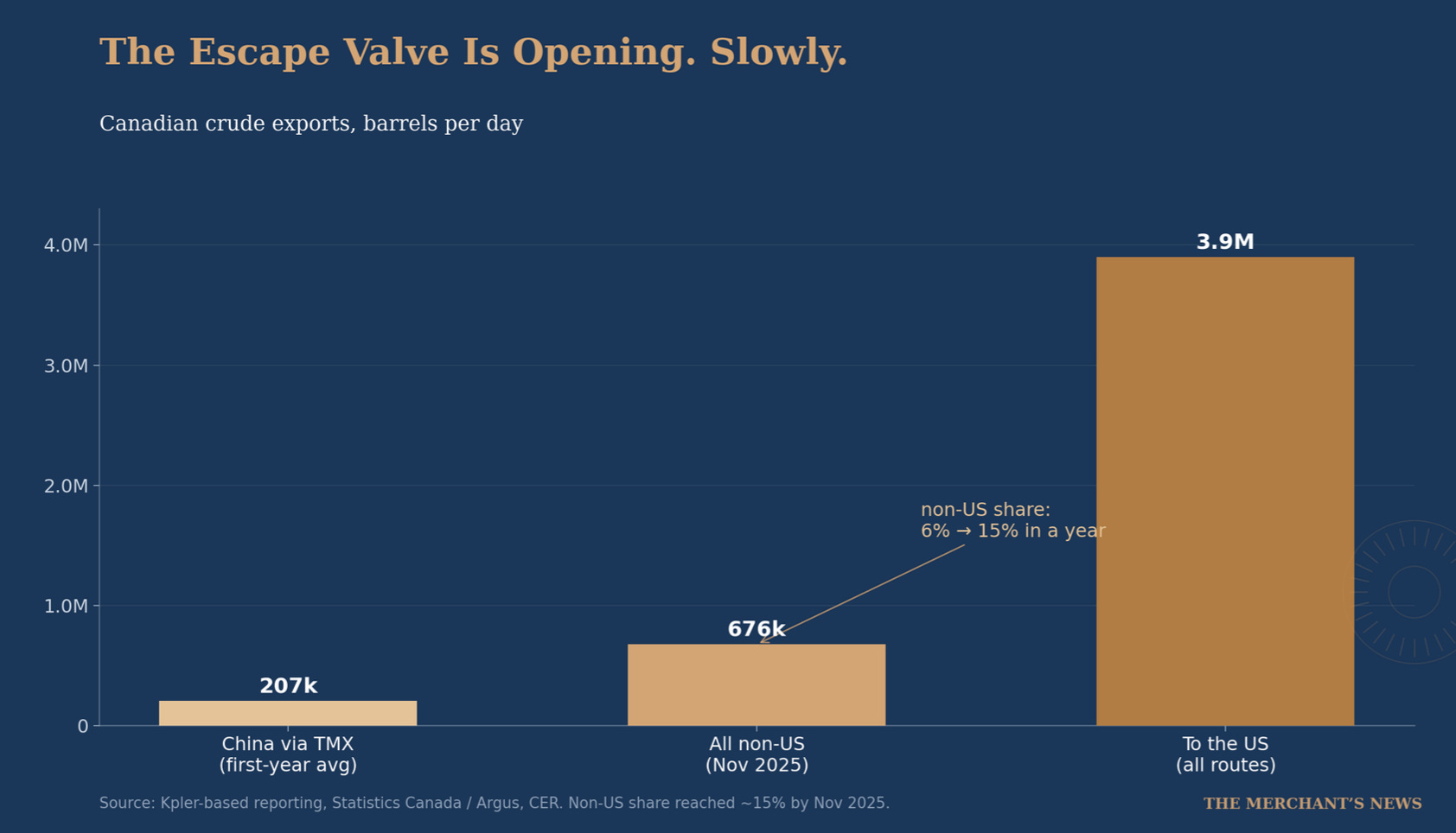
Now hold even that rising share against the 3.9 million barrels still heading south every day, and the story tells itself.
The diversification is planned and it is climbing, but it is still a minority next to the flood.
New lines toward other coasts keep dying in the same swamp of regulatory, financial and political fights that held Alberta hostage for a decade.
For now the escape valve is opening a crack, against a door the US has held shut for 50 years.
I walked through the deeper game here: US & China: Moves and Countermoves back in January.
The pattern holds, Washington is not trying to stop China from buying oil.
It is trying to make every barrel China buys politically complicated, and Canadian heavy is one of the cleaner replacements Beijing has been quietly courting for its lost Venezuelan and Iranian grades.
Venezuelan heavy is creeping back onto the US Gulf Coast under looser sanctions, but at around 150,000 barrels a day against Canada’s half a million there, it stays a supplement rather than a rival.
Canada, meanwhile, is welded into the American alliance, and Washington will lean on that to keep any real reorientation from happening…..
On Friday I flagged the pull from the other side too, the revived talk of Keystone and the quieter Prairie Connector line, which is Washington wanting even more of that heavy barrel routed to the Gulf (article: 2 Energy Bets That Are Going Right).
Canada is standing between 2 giants who both want its oil, each on their own terms.
Who actually owns it?
This is where the story turns from geopolitics to something more personal for Canadians.
Even as the country plays its energy card, most of the winnings are already spoken for.
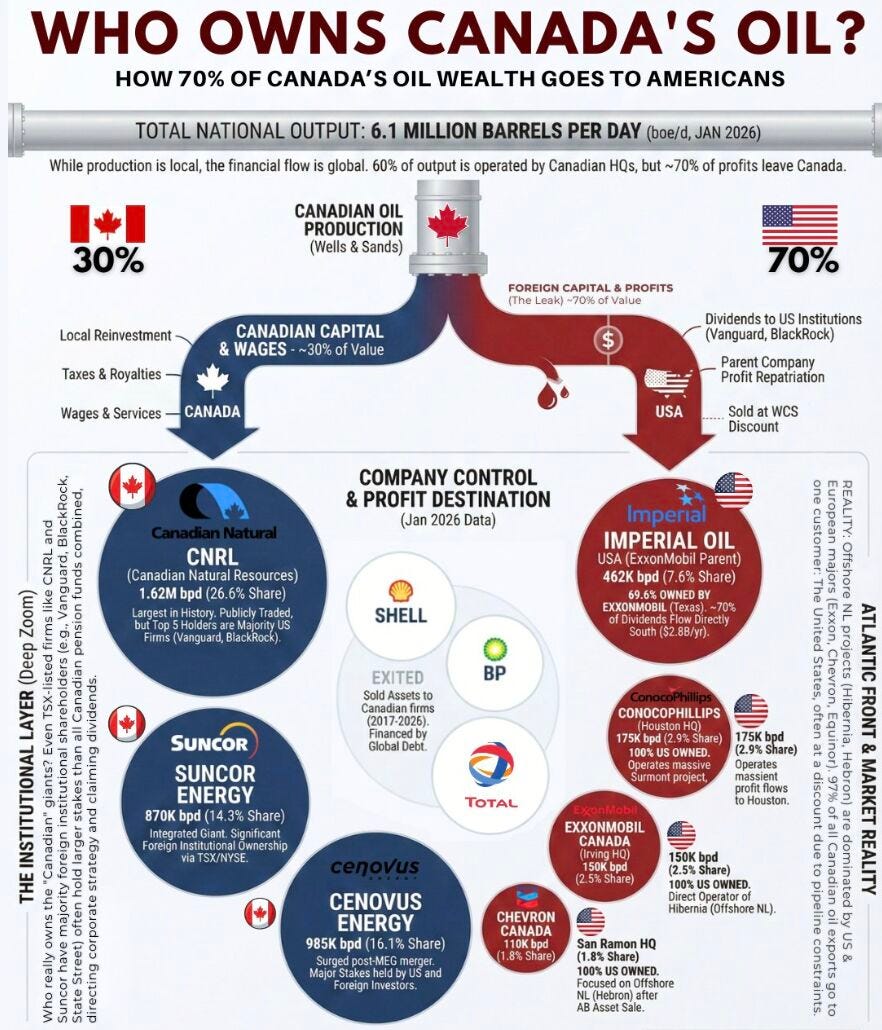
By independent estimates, from groups like Canadians for Tax Fairness and Environmental Defence, Canada’s Big 4 oil majors are roughly 73% foreign-owned, and about 60% American-owned. Imperial Oil, which wears a Canadian face, is 69.6% owned by ExxonMobil of Texas, a hard number straight out of the filings.
One NGO tally put the profits paid to American owners of the Big 4 at something like $49 billion over 2021 to 2024.
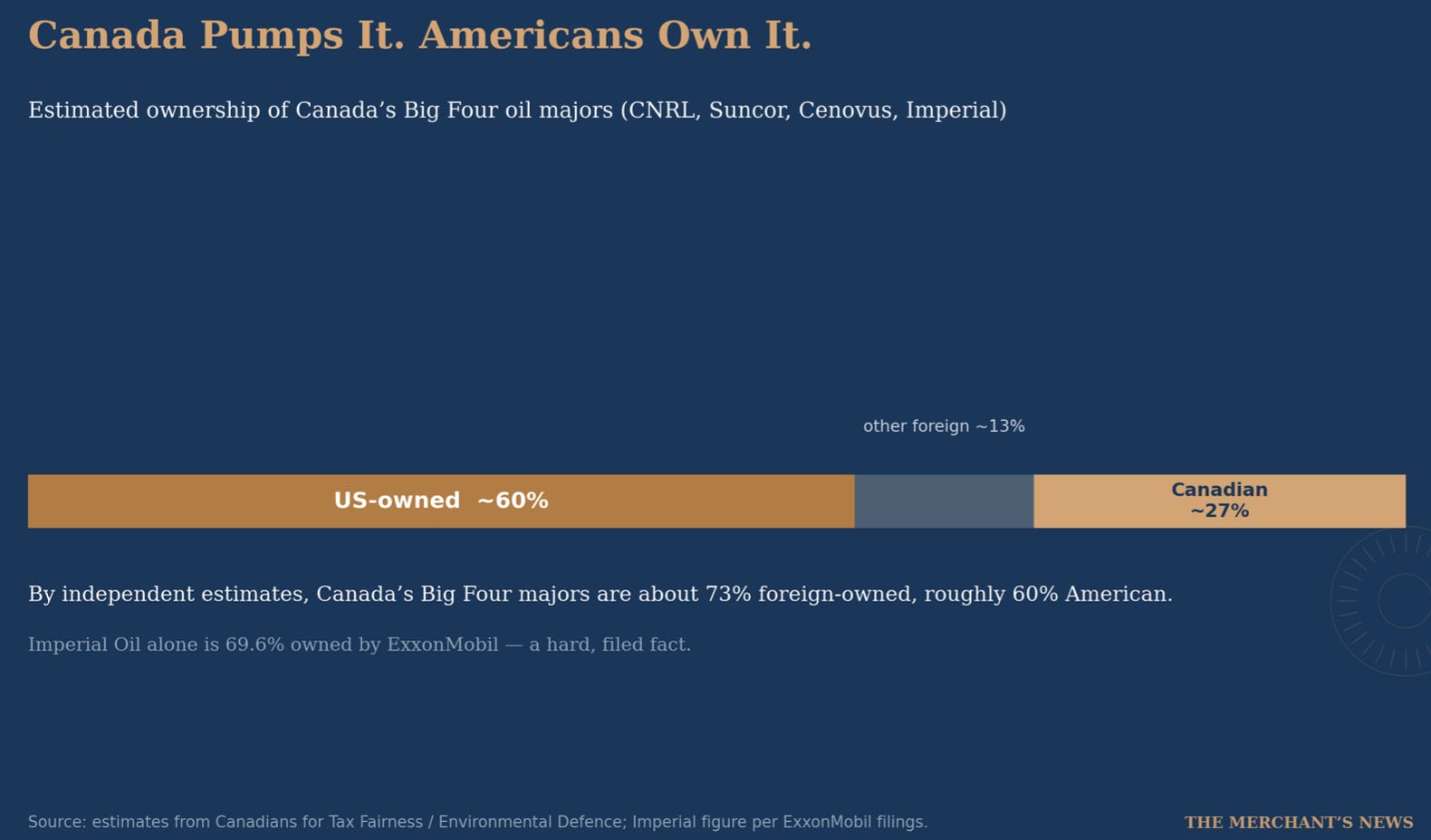
So picture the full circuit.
Canada digs the barrel, sells about 90% of it to the US at a built in discount, and then deliver a majority of the profit back south again as dividends to American and global shareholders.
The resource is Canadian.
The cash flow, in large part, is not.
As one widely shared take on all this put it, the real debate is who controls the upside.
Carney’s superpower problem
Which brings me to the line I opened with, and to the most interesting question hiding under this whole tariff drama.
Carney keeps calling Canada an “energy superpower” and says mastering its energy is mastering its destiny.
It is a good line.
In my view, the gas story is where it runs into trouble.
Canada spent years and a fortune building LNG Canada at Kitimat, and in June 2025 it finally started shipping gas to East Asia, the first real crack in an export business that until then sold 100% to the United States.
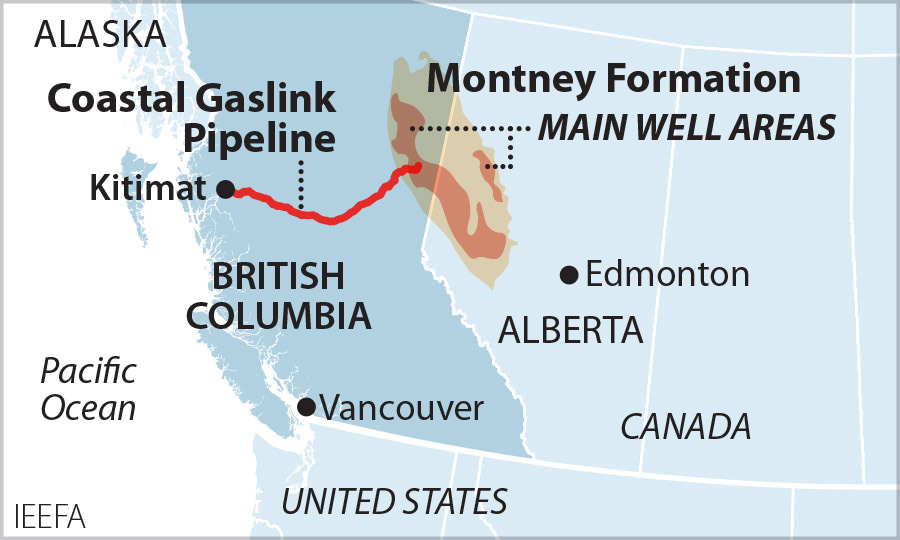
The catch is who pockets the difference.
Canada handed the plant to a consortium of international oil majors and national oil companies and each one optimizes its own global portfolio ahead of Canada’s.
So the netback, the real margin between cheap Canadian gas and the world price it fetches once it’s chilled and shipped, does not stay in Canada…It accrues to the equity.
There is no Canadian entity built to capture it.
In plain terms, a country without a national champion or a fiscal framework fit for LNG ends up a price taker on its own gas, selling at a discount to the American benchmark through a thin domestic hub.
Look at who does it differently.
Qatar runs its gas as a state monopoly and captures the whole rent, exporting on the order of 77 million tonnes a year, heading toward 142 by 2030, for a margin one analysis pegs at $30 to $36 billion a year.
Norway did the same thing inside a Western democracy with listed companies and hub pricing, Canada’s exact conditions.
The Norwegian state holds 67% of Equinor, controls most of the shelf, and funnels the rent into a sovereign fund worth around two trillion dollars.
Australia is the cautionary tale, a country that became a top LNG exporter and gave the margin away, with reports of tens of billions in gas leaving effectively royalty-free, then watched shortages and factory closures come home.
Canada is walking that same path.
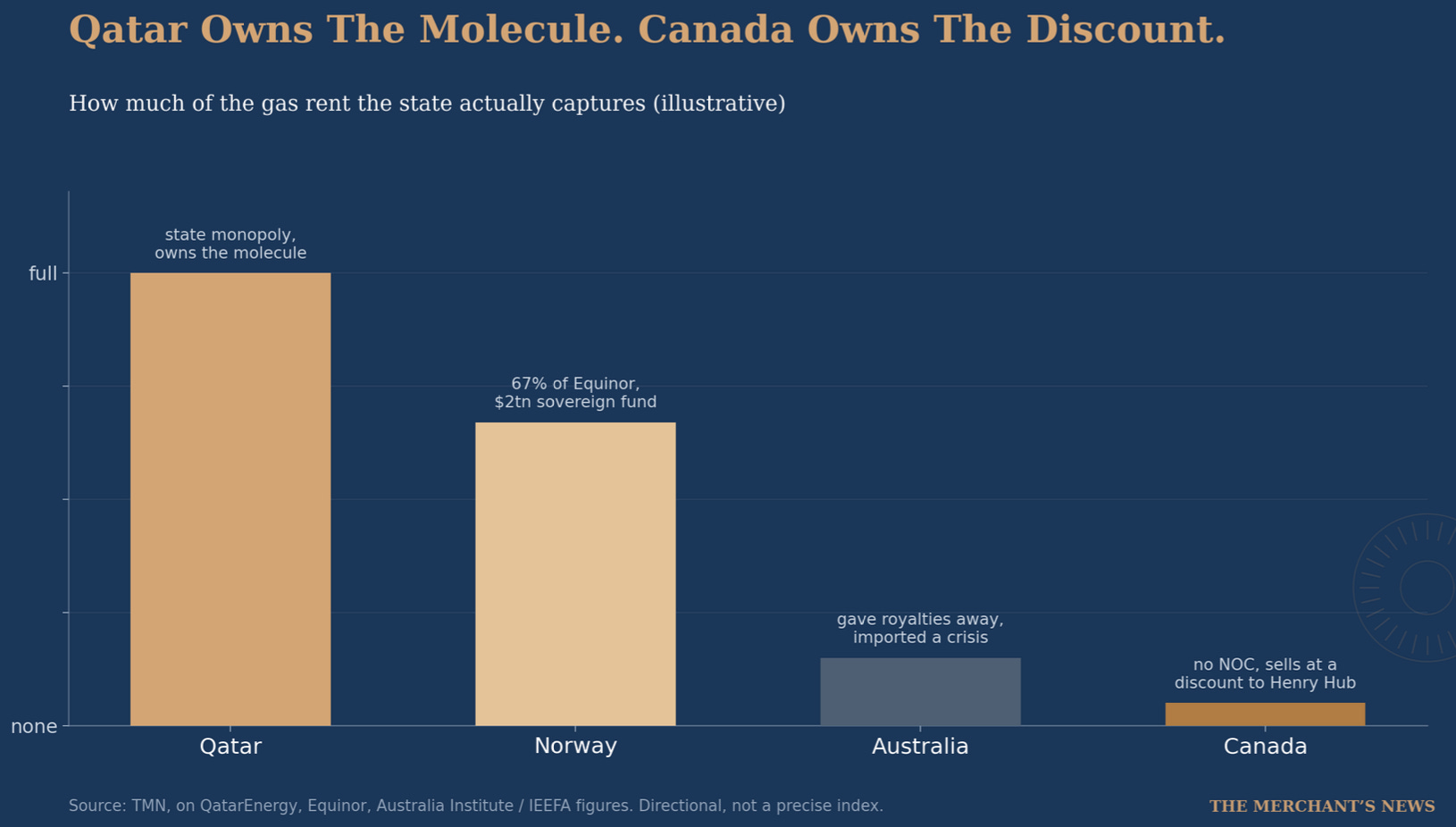
Qatar captured the upside by owning the molecule. Norway captured it by owning the discipline. Australia lost it by owning neither. Canada’ s turn is next,and the only question is what it chooses to own.
Where I come out?
Step back and the tariff fight looks smaller than the headlines.
Washington can tax lumber and dairy and hockey sticks all it likes and it will hurt, but energy is the ballast neither side can actually cut.
That is precisely why oil and gas were left off the list.
The barrel is Canada’s real leverage, and both Washington and Beijing know it.
But the tariffs have exposed a deeper question than “can Canada find another buyer” The honest one is whether Canada will ever own the value of what it sells.
It has the resource and the scale, a record of more than 6 million barrels a day coming out of the ground.
What it hasn’t built is ownership of the cash those barrels throw off. That fits the bigger view I keep coming back to in this letter.
Energy is the foundation everything else stands on, which makes it the best hard asset there is.
The lesson Canada is being handed the hard way is that owning the resource and owning the upside are two very different things.
One you’re born with, the other you have to choose.
Mind the barrel, and mind who’ s holding it.
Thank you for reading!
We truly appreciate your interest in staying informed about the latest global trends and insights.
Please let us know if you liked it, what we can improve, and if you think this newsletter could help a friend, please send it to them!
Stay update and take care!
The Merchant’s News
GP
Please remember that everything written in this newsletter/website is for educational purposes only and should not be interpreted as financial, legal, or tax advice. The opinions, analyses, information, or recommendations expressed here are solely my own. Remember that financial decisions involve risks and should be made based on your own personal circumstances and after consulting a qualified professional.