

Dear Merchants,
Let’s open with a line that captures exactly where we are:
“You may not be interested in war, but war is interested in you” Leon Trotsky
And right now, I think it fits very well with oil🛢️
18 days into the Strait of Hormuz blockade and traders are still obsessing over the wrong thing.
Everyone wants to know when it ends.
Nobody’s asking what’s left when it does.
The market’s reaction has been, frankly, strange.
US equities are only modestly lower. Gold, which should be very bullish right now is actually down. The Strait of Hormuz is partially blockaded, Gulf energy infrastructure has taken real hits, and yet markets are behaving like this is a 3 week story that resolves cleanly.
(👆Map shows how 17 days of attacks have evolved in US/Israel-Iran war )
That’s a dangerous bet!
The conflict may well be limited in duration. But the tail risk of it dragging on is being seriously underpriced…. That gap matters a lot.
The timeline to a ceasefire is a completely different question from what production capacity looks like after and what the infrastructure damage actually means for getting oil out of the ground and onto ships.
You need both answers to price oil correctly between now and the end of 2026.
Quick Read on Timing:
Based on where the diplomacy is sitting right now, the signals coming from both sides, and what the post-Khamenei power shift in Iran actually looks like:
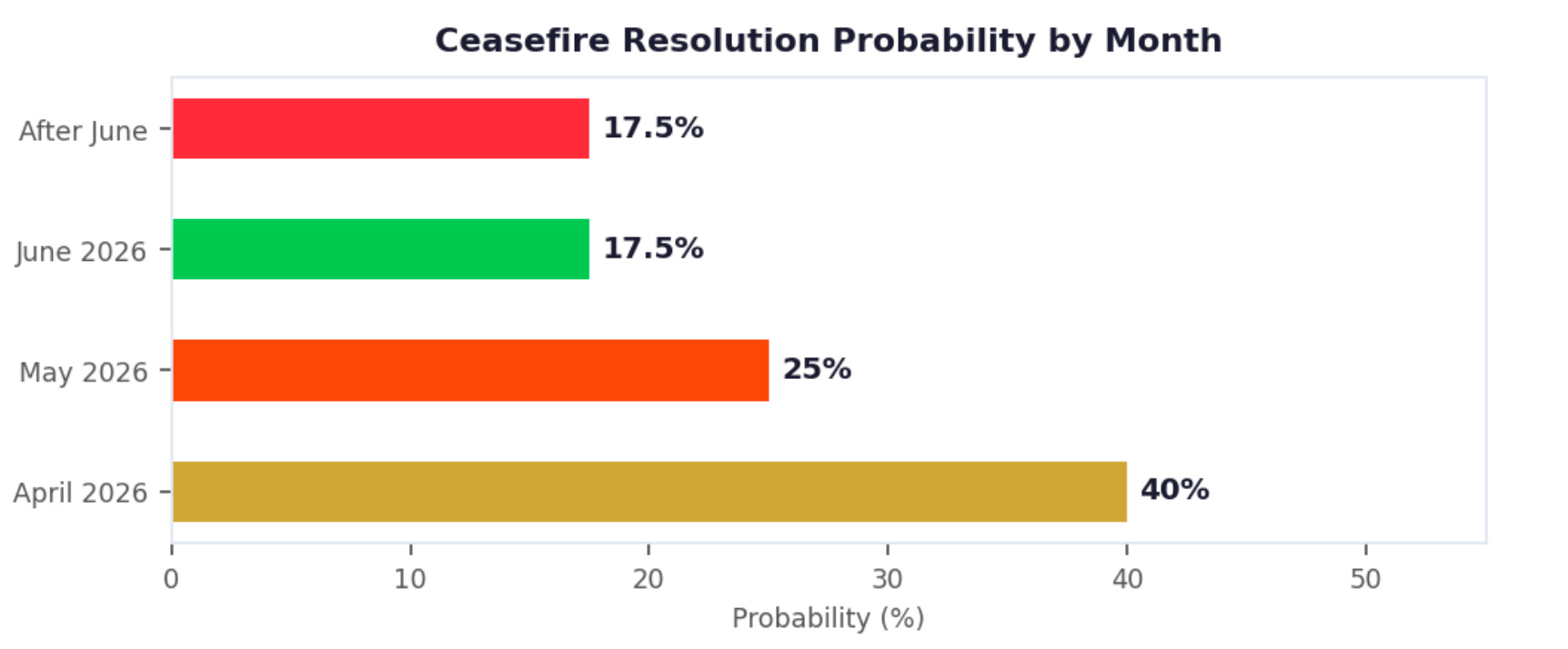
Most likely read: talks grind on through May-June before anything real happens, and nothing gets resolved before July.
But here’s the part that actually moves markets: even if a deal gets signed tomorrow, oil prices don’t come back down because the infrastructure damage isn’t something you fix in a week. It’s going to take months.
Why April Is Probably Too Soon (But Not Impossible):
What the Post-Khamenei Power Shift Actually Means?
On February 28, US-Israeli airstrikes killed Ali Khamenei. On March 17, security chief Ali Larijani was assassinated. The IRGC is now trying to figure out who’s in charge right at the moment when a deal with Washington could actually reshape the whole region.
This creates an odd dynamic. The new IRGC leadership isn’t as ideologically locked into the blockade as Khamenei was. But they also can’t afford to look like they folded.
Why Iran might take a deal in April:
New leadership is more transactional they care about outcomes, not symbolism
Domestic pressure is building: war damage, civilian casualties, economic pain
The blockade isn’t hurting the US the way it was supposed to it’s actually hammering Iran’s own trading partners
They can spin it as a win: ‘we showed our strength, we got concessions,’ open the Strait and move on
Why they’ll probably hold out through May:
Khamenei died defending this blockade backing down right after looks terrible internally
IRGC needs to prove it’s strong enough to survive, not capitulate to Washington
Every day the Strait stays closed, oil prices stay high which keeps Trump on defense politically and gives Russia and other OPEC+ members something to like

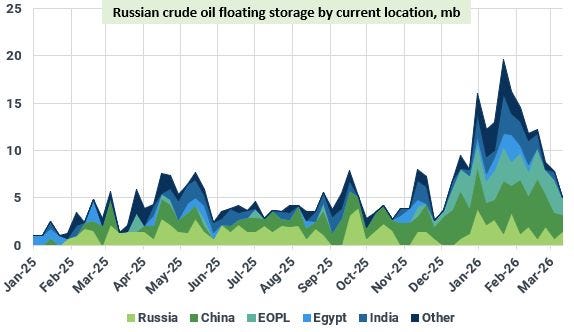
Russian crude after sanction ease is going to asian refineries fast
Trump’s Problem
Gas prices jumped 51 cents a gallon in a single week (March 10-17) and are now sitting at $3.75. Midterms are in November. Voters in swing districts are already feeling it. But Trump can’t be seen rushing to cut a deal with Iran 8months before an election.
What April Probably Looks Like?
Back channel talks pick up, some positive signals with no breakthrough and both sides maintain pressure without pushing things over the edge. The Trump team tries to claim a win through limited sanctions relief or unfreezing some Iranian assets. Iran claims gradual opening while keeping the Strait mostly shut.
Result: 50-70% blocked through April, WTI hangs around $95-105, and everyone in the market panics about Q2.
The Bigger Problem
Here’s what changes the whole picture… even if talks produce a surprise deal in April and the Strait starts opening by mid-May, prices don’t crash.
Too much production capacity has been destroyed or damaged. This is the part of the story most traders are asleep on.
🇸🇦 Saudi Arabia : Ras Tanura (The One That Really Matters)
The situation here is worse than the headlines let on.
On March 9, Saudi Aramco announced ‘restart procedures’ at the 550,000 bpd Ras Tanura refinery following drone strikes on March 2 and 4. CEO Amin Nasser said they were in the process of starting back up.
What he didn’t say: any kind of timeline.
That silence tells you something.
Here’s what actually happened:
March 2: 1st drone strike hits processing units
March 4: Follow-up attack on the same facility
March 9: Restart announced, but running at only 200,000-300,000 bpd vs. normal 550,000
March 18: Still running at reduced rates, still vulnerable
That’s a 250,000-350,000 bpd shortfall.
For context: the 2019 Abqaiq attack knocked out 5% of global capacity.
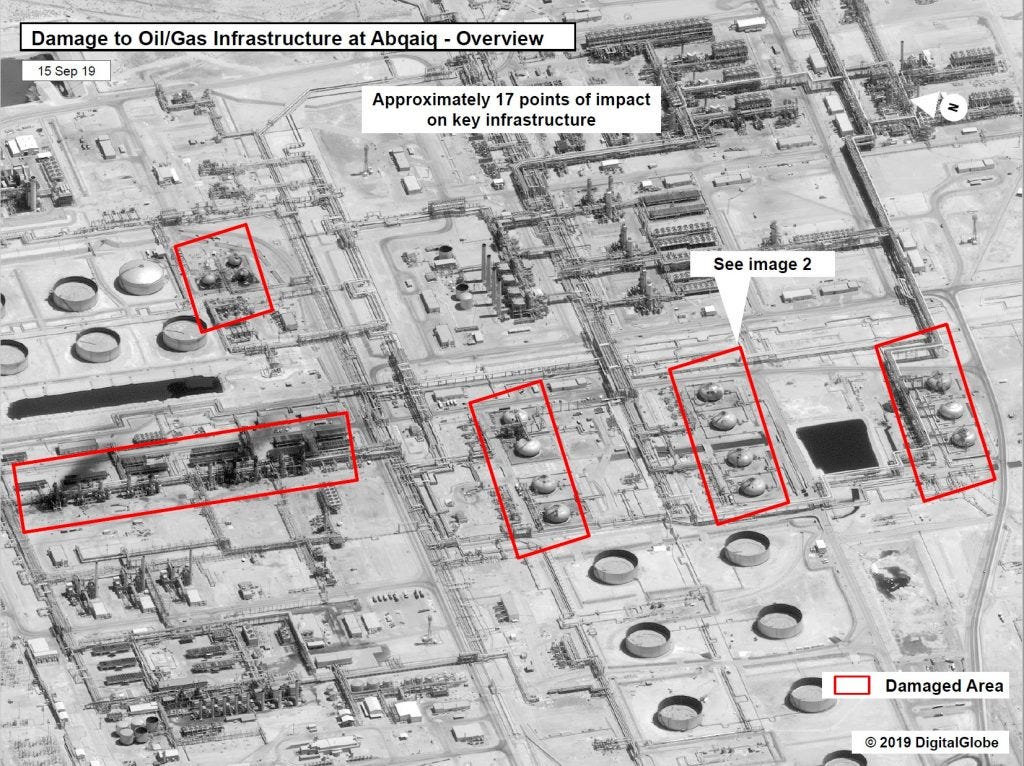
Even then ,in peacetime, with full supply chains, Aramco’s repair team, which is very good, took 6 months to get back to partial capacity and over a year to get fully back online.
At Ras Tanura in March 2026, supply chains are disrupted, engineers have to work carefully because of ongoing drone threats, and the damage wasn’t minor.
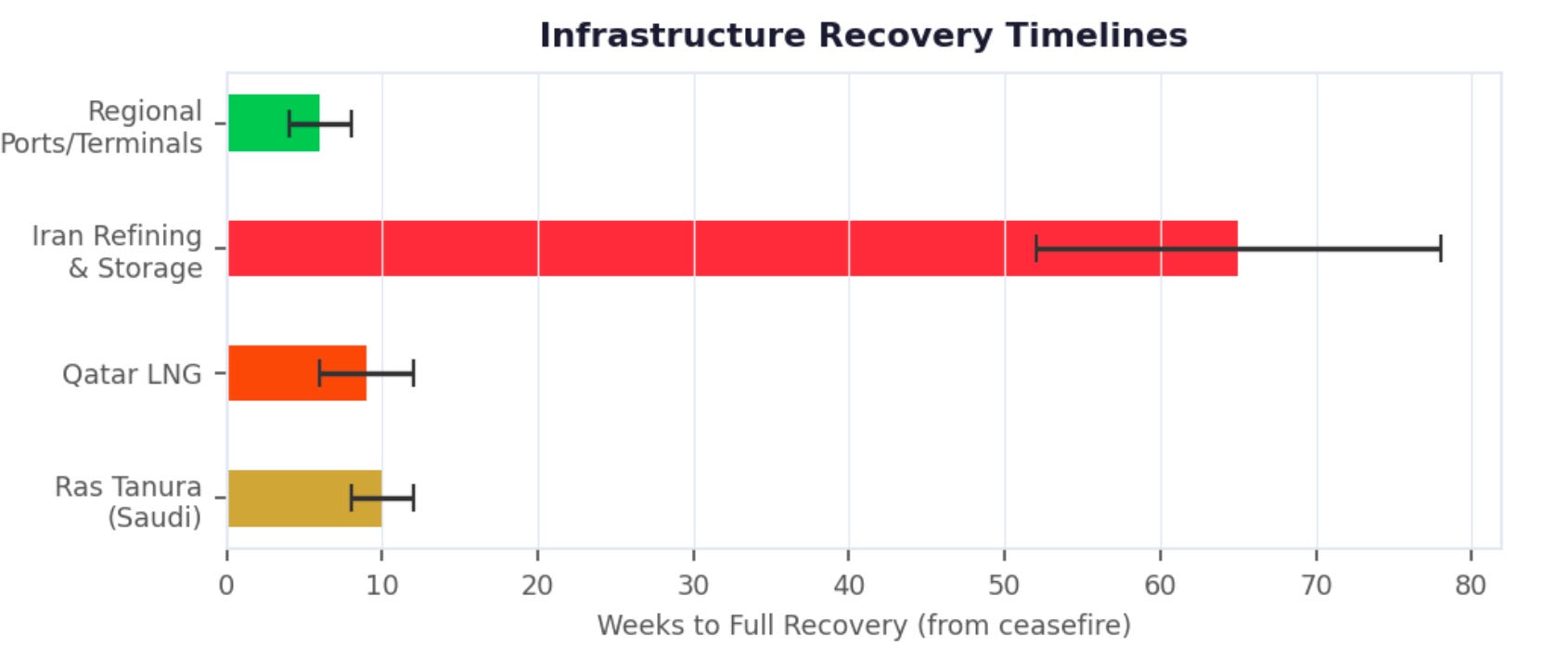
Realistic path back to 550,000 bpd: 8-12 weeks minimum, assuming no more strikes. If the Strait stays shut past end of April, full recovery slides to late June at the earliest.
🇶🇦 Qatar : Ras Laffan LNG (The Global Market Shock)
Qatar is 20% of global LNG supply. Ras Laffan was hit on March 2-4 and has been completely offline since, that’s 15 days and counting as of today, with force majeure declared on all LNG contracts.
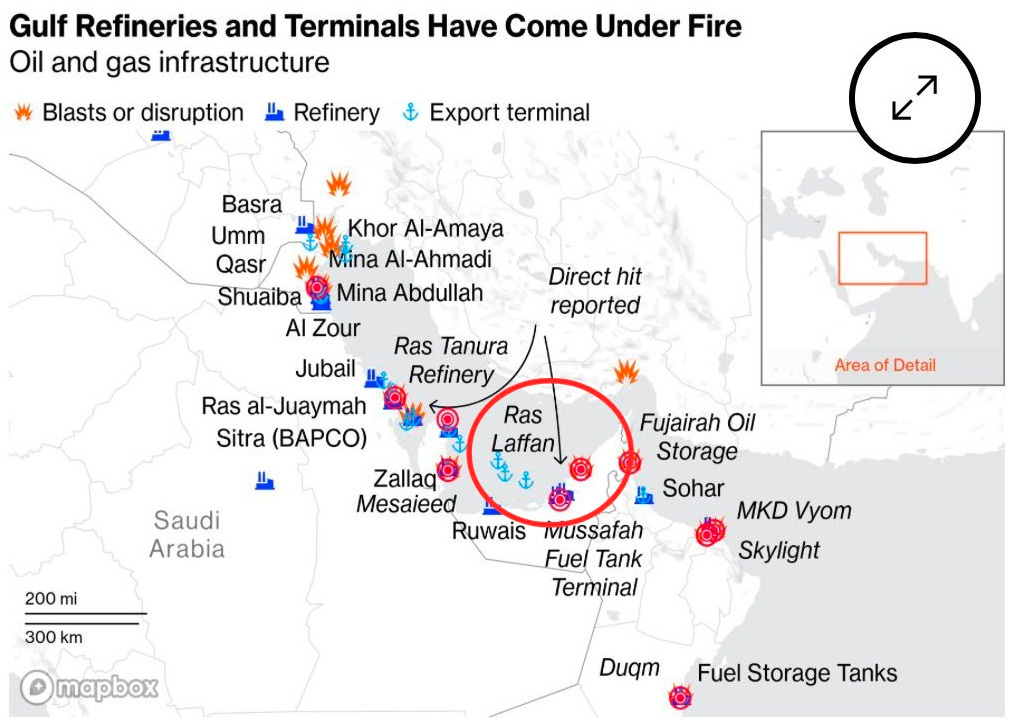
The reason it can’t restart quickly is physics. LNG requires cooling systems and you can’t just pour warm gas back into super cooled equipment. You have to bring up each of the 14 production trains 1or 2 at a time. Rush it and you risk thermal shock that destroys multi billion dollar equipment and pushes repairs out 6-12 months.
the best case path if Hormuz opens in May:
May 15-20: Safety inspections, equipment checks
May 20-27: Sequential restart, 1-2 trains per day
June 1: Partial production at 30-40% capacity
June 15: Approaching normal
Mid-late June: Full capacity
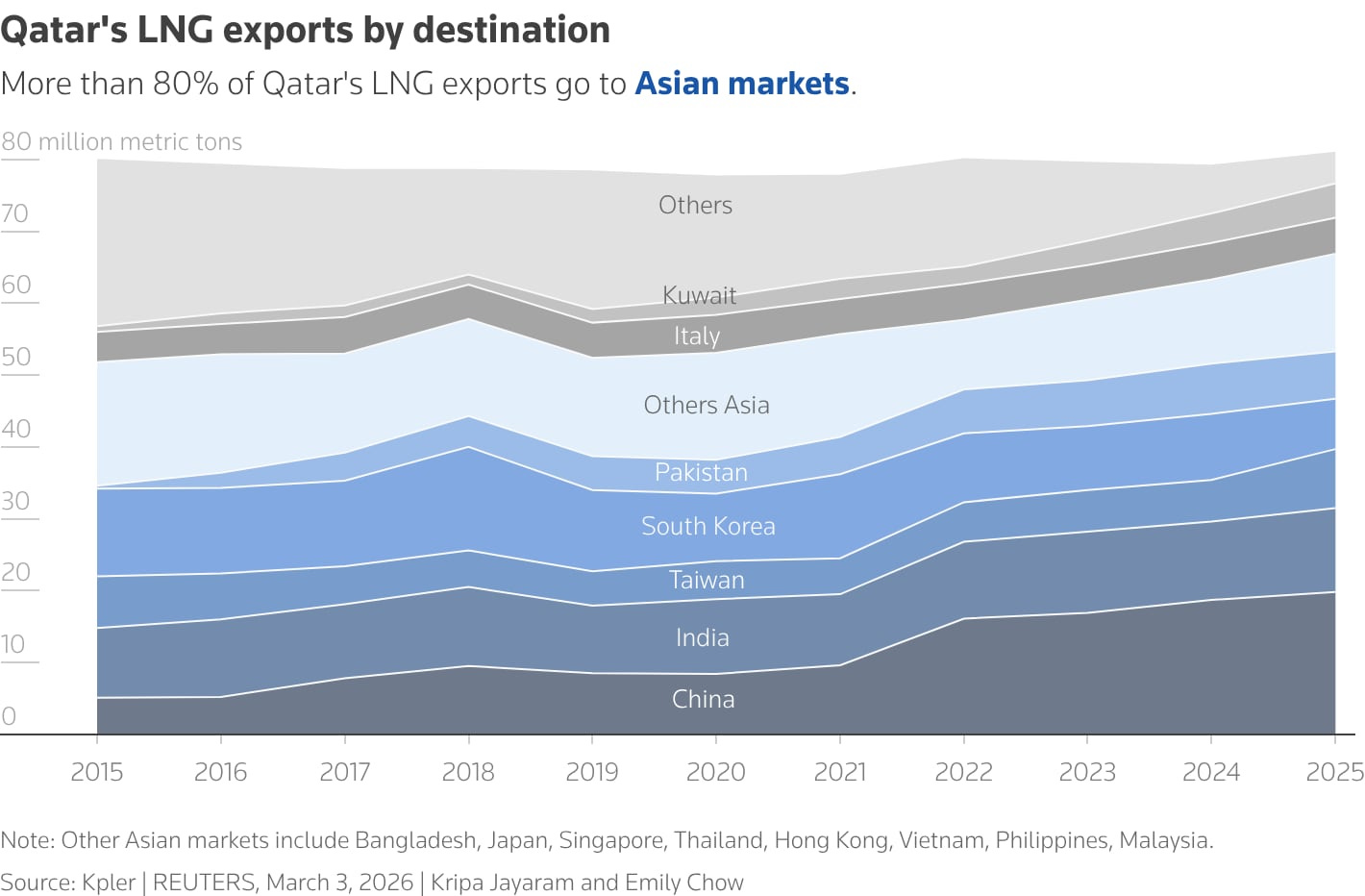
That’s 2.5+ months offline from a March 2 shutdown. Qatar’s 77 million tonnes per year of LNG capacity equals roughly 2.1 million bpd equivalent. Even partial loss of 1.5 million bpd is a real problem for European and Asian buyers.
🇮🇷 Iran: Refining & Storage (A Long-Term Problem)
Iranian infrastructure has taken a serious beating:
Aghdasieh oil warehouse (Tehran): destroyed
Tehran refinery (900,000 bpd capacity): damaged
Shahran oil depot: destroyed hit twice, March 2 and March 8
Karaj oil depot: destroyed
Multiple other facilities hit
Lost refining capacity: 300,000-400,000 bpd.
Lost storage: 40-50 million barrels of capacity gone.
Iran is currently exporting about 1.1 million bpd, all going to China through workarounds, down from 2.16 million pre-crisis.
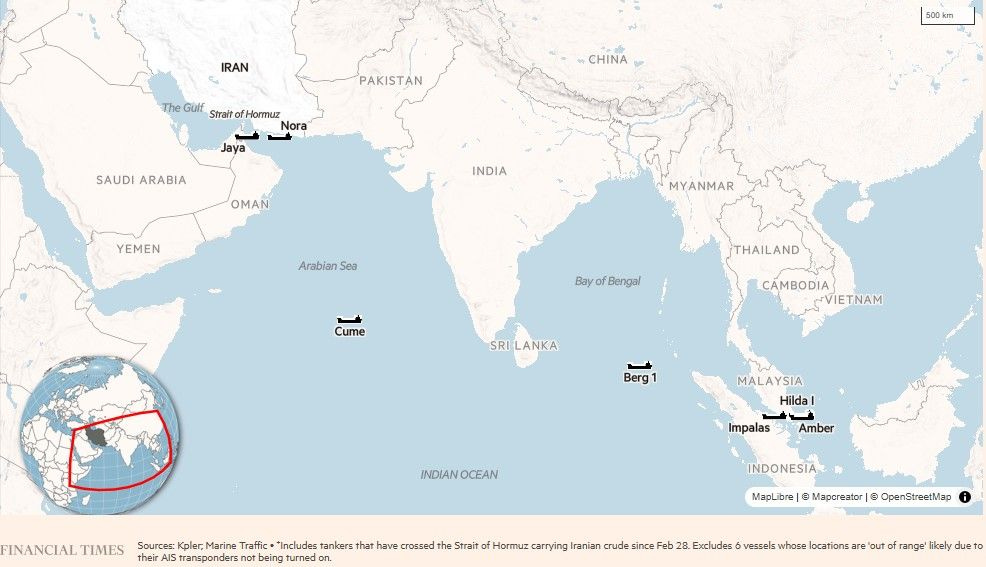
Without functional storage and refining, Iran can’t ramp exports up quickly even if sanctions get lifted. Reconstruction timeline under wartime conditions with sanctions in place: 12-18+ months.
⏳ Historical benchmarks for reference:
2003 Iraq War saw multiple refineries take 5+ years.
Ukraine’s Russian refinery damage is still ongoing.
Major hurricane damage to US Gulf facilities typically takes 6-18 months.
Wartime reconstruction with sanctions is 2-3x slower than peacetime.
Applied to today even with 100% conflict resolution by June, production capacity is back to only 80-85% of pre-crisis levels by Q4 2026. Full recovery is 2027.
The Immediate Crisis
Beyond the damaged infrastructure, there’s a more immediate problem.
The Gulf producers are running out of places to put the oil they’re producing right now.
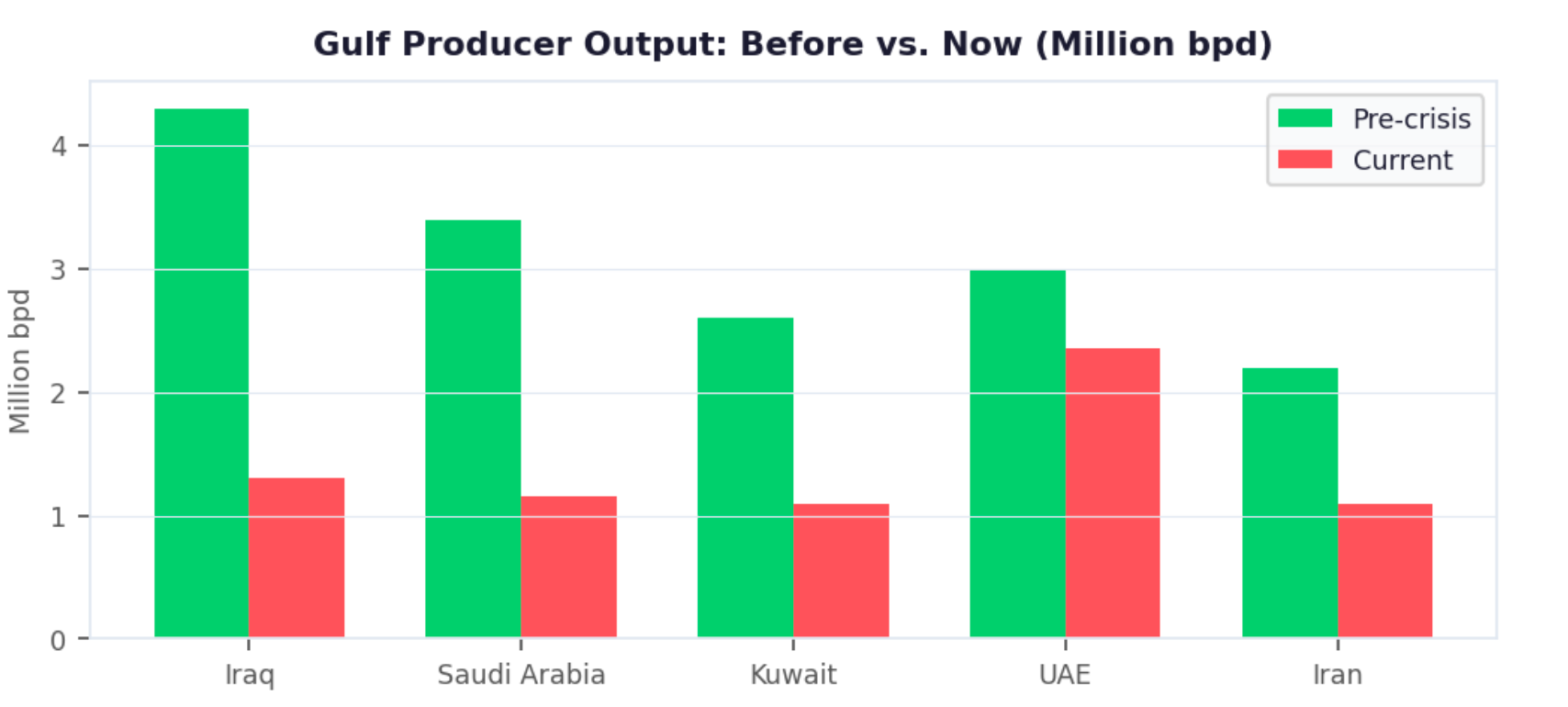
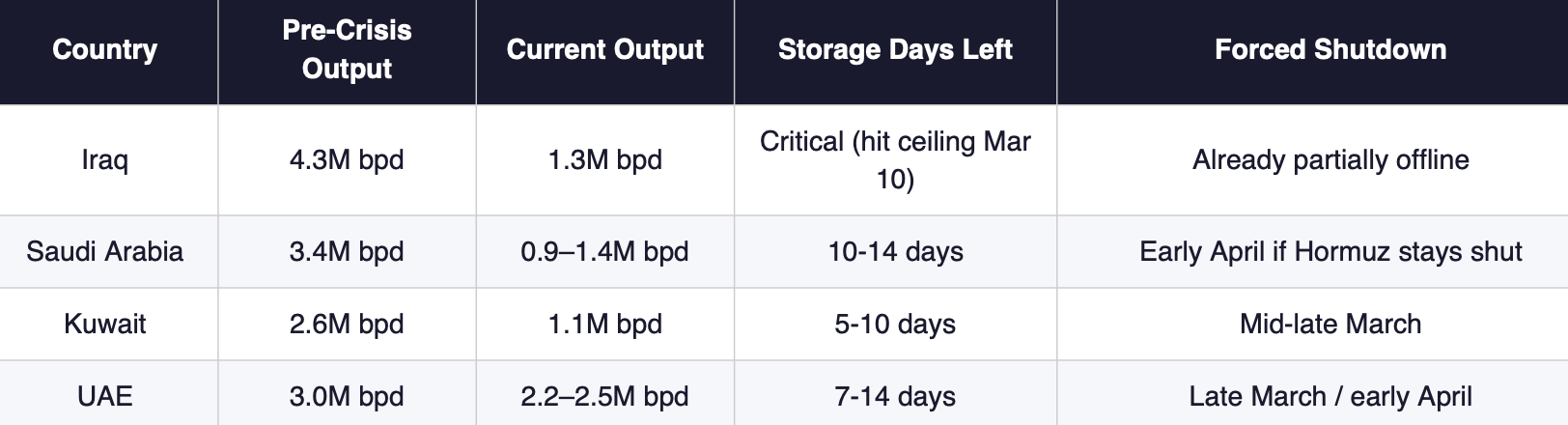
The key thing here is that these aren’t voluntary OPEC+ cuts that you can flip back quickly, storage tanks are full. If the Strait stays shut, you’re looking at an additional 2-3 million bpd forced offline total Gulf cuts of 8-10 million bpd, with nothing to fix it quickly.
You Can’t Just Swap in US Shale
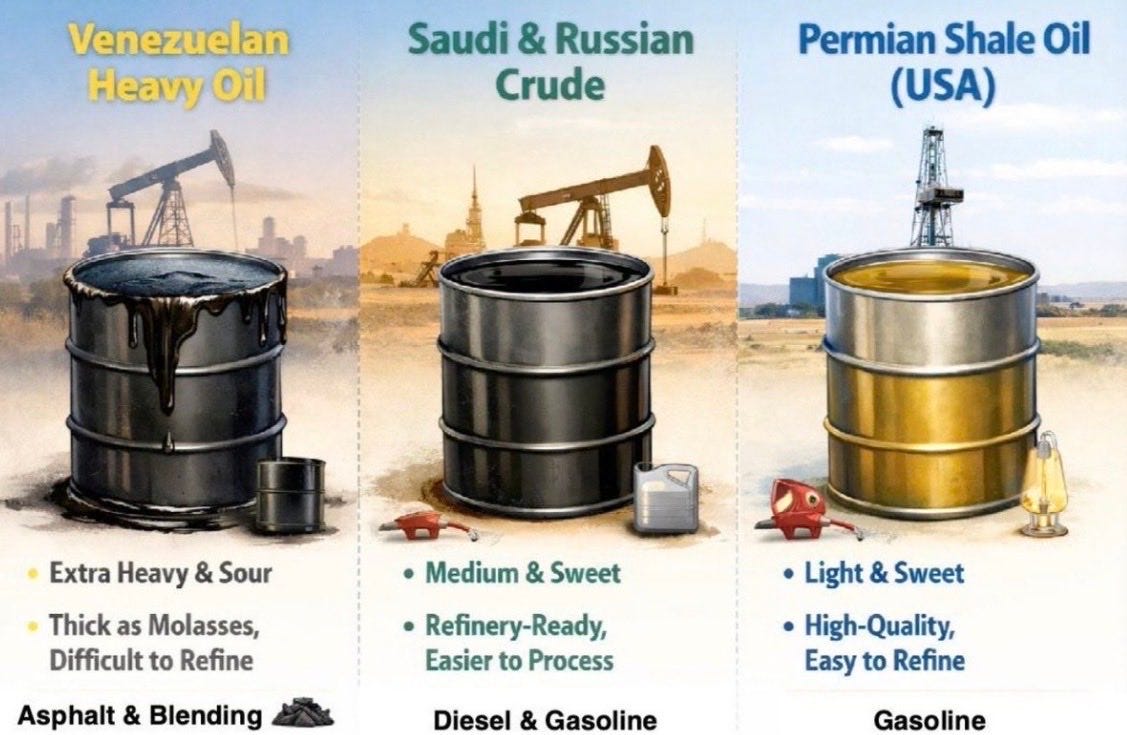
Even if the US cranks up shale exports, it doesn’t actually replace what the Gulf is sending to Asian markets. The oil is a different type.
Gulf producers ship medium to medium light crude. US shale is noticeably lighter. Asian refineries were built specifically to handle the heavier Gulf grades. They can’t just run Permian crude through the same equipment without significant modifications that take weeks to months.
What this actually means?
Market is short 15-16 million bpd of usable Gulf crude
US tries to push an extra 1 million bpd of shale onto Asian buyers
Asian refineries can only actually use about 400,000 bpd of that additional shale
Real offset: 400,000 bpd not the headline 1 million
Remaining shortfall: 14.6 million bpd
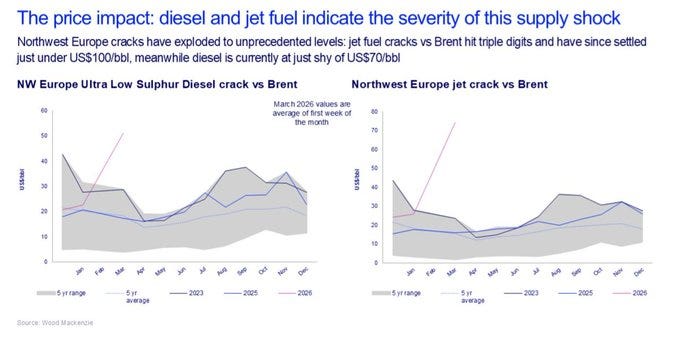
The product mix problem makes it worse. Light shale crude produces more gasoline, less diesel. But right now,demand is heavy on diesel (industrial use, transportation). A surplus of gasoline doesn’t help people who need diesel. The actual supply deficit is worse than the raw volume numbers look.
Where Things Stand Right Now ?(March 18)
Hormuz Transit Numbers
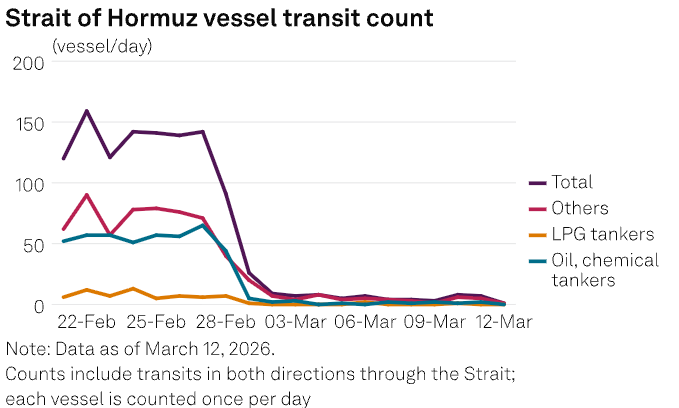
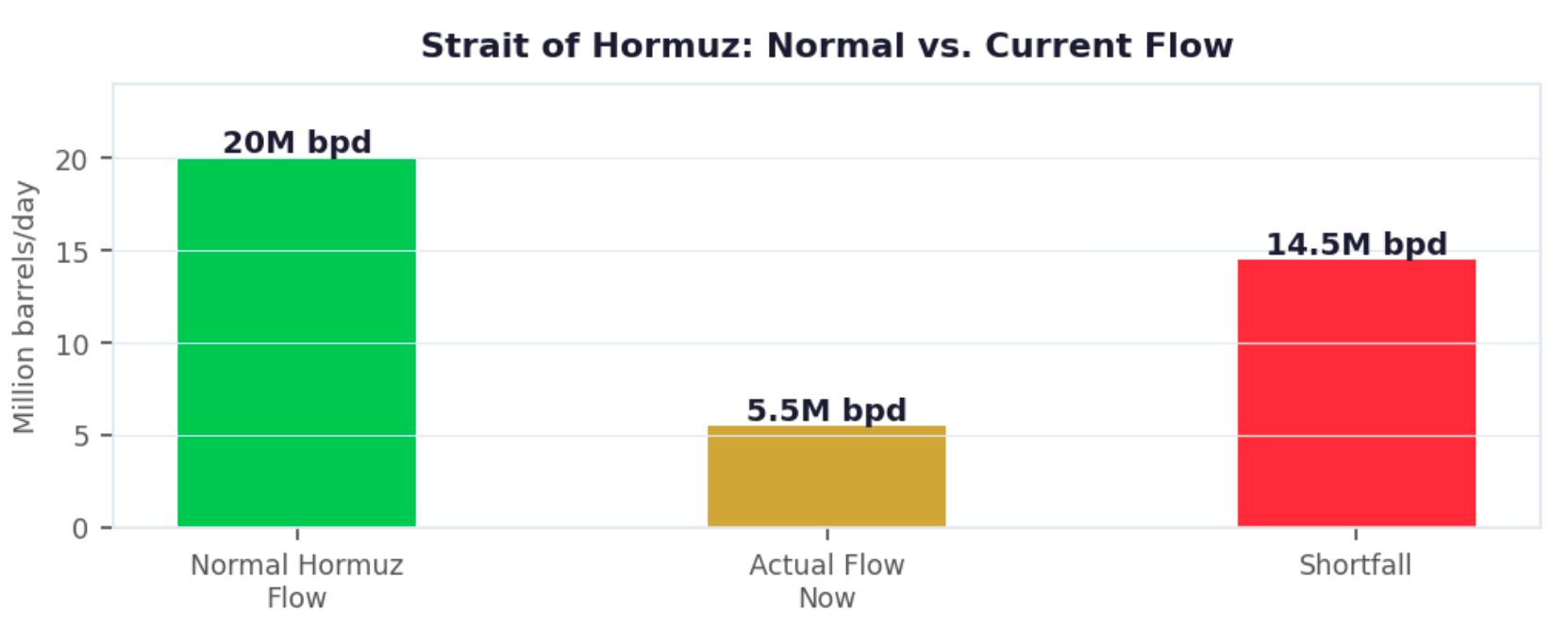
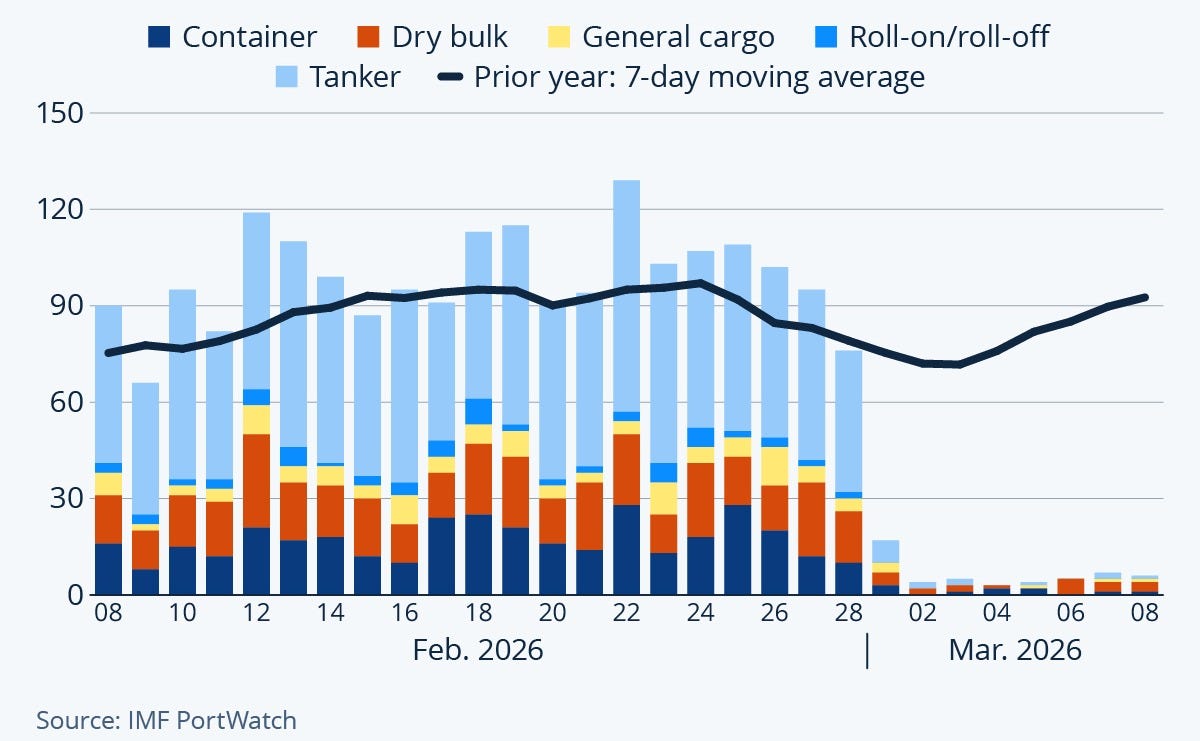
Lloyd’s List Intelligence: only 90 tankers have gone through since March 1 normal is 500+

JPMorgan: Hormuz flow collapsed from 16 million bpd to 4 million bpd (75% drop)
About 4-5 million bpd of non Iranian cargo is getting through after verification checks
Iranian exports: 1.1 million bpd, all to China
Total: 5-6 million bpd actual vs. 20 million bpd normal, gap of 14-16 million bpd
Strategic Reserve Releases: Not Enough
The G7 response announced in mid-March, 400 million barrels total, sounds big. Here’s why it doesn’t move the needle:
Daily release rate: 1.9-3.9 million bpd depending on the pace
Market shortfall: 14-16 million bpd, reserves cover 15-20% of the gap
At 2.2 million bpd average: 400 million barrels lasts about 181 days
But production keeps falling as storage fills by mid-May, reserves run dry while market is still short 10-12 million bpd
US has already released 172 million barrels markets had already priced it in at $88-92, barely moved
Oil Price Scenarios
